

Cut, Colour, Clarity, and CHARACTER
Here is a mindlessKNOTmindless respite from the reality of the world today. Once again brought to through the overheard musings of my middle daughter.

Her question? Why would anyone buy a real diamond when lab-grown diamonds are as beautiful, better for the environment and less expensive?
She had me stumped. Did my belief that real diamonds are just “better” make me a victim of corporate marketing campaigns: “A Diamond is Forever”, a diamond is “Worth the Wait”?
Henna’s question led me to a piece in The New Yorker by Emilia Petrarca about Taylor Swift’s engagement diamond, not lab-grown, but also not “perfect” as it could be.

For decades the diamond industry taught people to evaluate stones through a familiar formula: cut, colour, clarity, carat. The closer it came to technical perfection, the more valuable it was assumed to be.
In her article, Petrarca writes that “for decades, couples were told to value a certain kind of rarity.”
But the ring Swift now wears doesn’t follow that formula in the usual way. It is an old-mine cut, a style shaped by hand centuries ago.
The article’s author describes the glow of these mine-cut stones as something different, “a warm glow that calls to mind the sepia of an old Hollywood movie.”
At one point in the article, a diamond dealer gestures toward a table covered in perfectly cut modern stones and shrugs. “These are regular… People know what this is. But after what happened… people are looking for something different.”
Part of what “happened,” of course, is the rise of lab-grown diamonds.

For the first time, the same physical conditions that produce a diamond deep inside the earth can be recreated in a laboratory. Pressure, heat, crystallization — the recipe can now be repeated. And repeated. And repeated again.
Technically speaking, the result is still a diamond. Often a very perfect one. But once perfection becomes easy to manufacture, something interesting happens to the idea of rarity.
The stone itself stops being the whole story and the conditions that created it begin to matter more.
Petrarca notes the way diamonds are evaluated may now include another quality:
“Cut, Color, Clarity is being replaced by Cut, Color, Clarity, and CHARACTER.”
In the article, Petrarca describes the appeal of a stone that carries “a residue of life.”
The moment something can be mass-produced, we suddenly become more aware of everything that cannot be.
The slow formation of a diamond deep underground. The artisanship implied in a hand-cut stone. The fact that something existed long before it arrived in front of us.
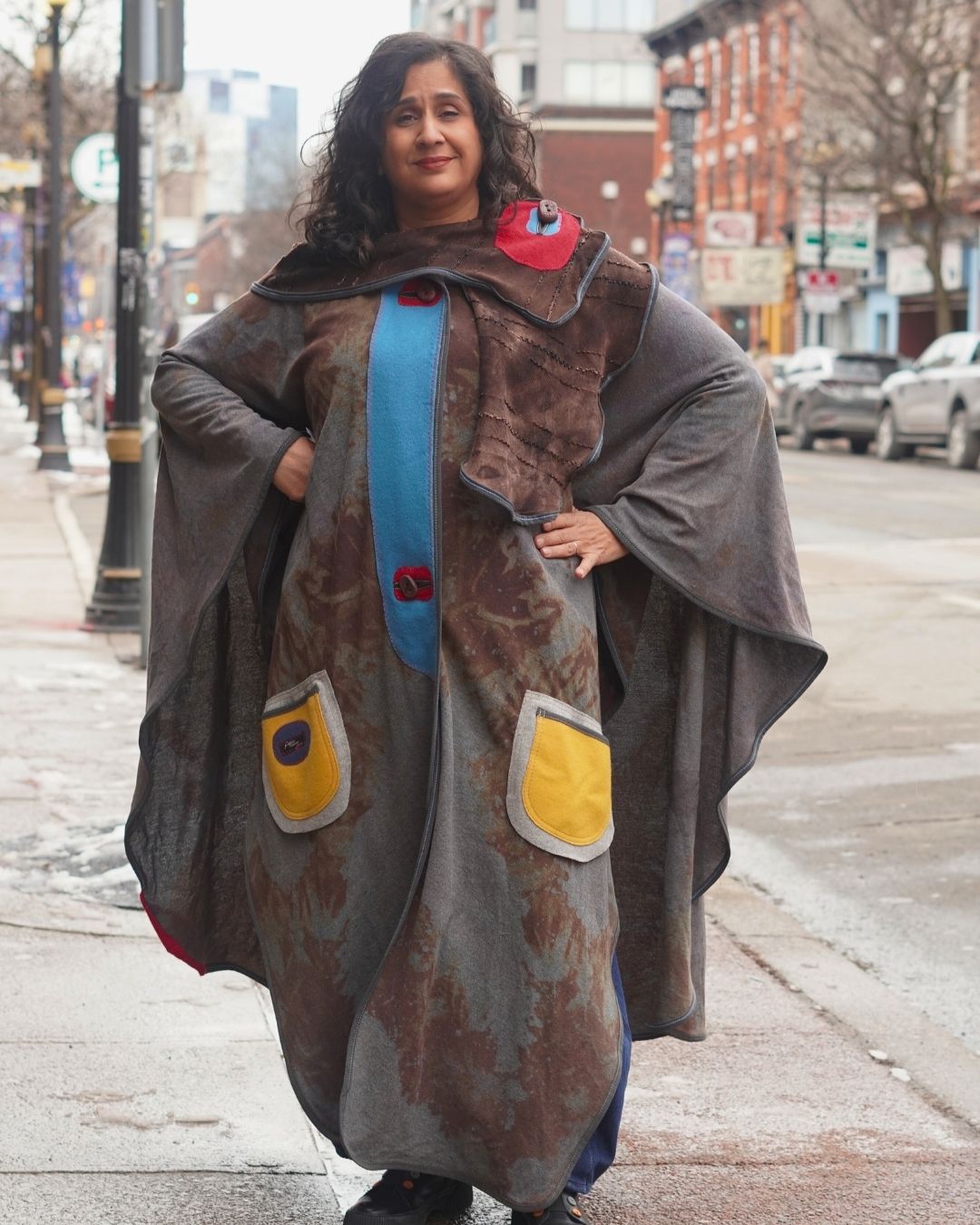
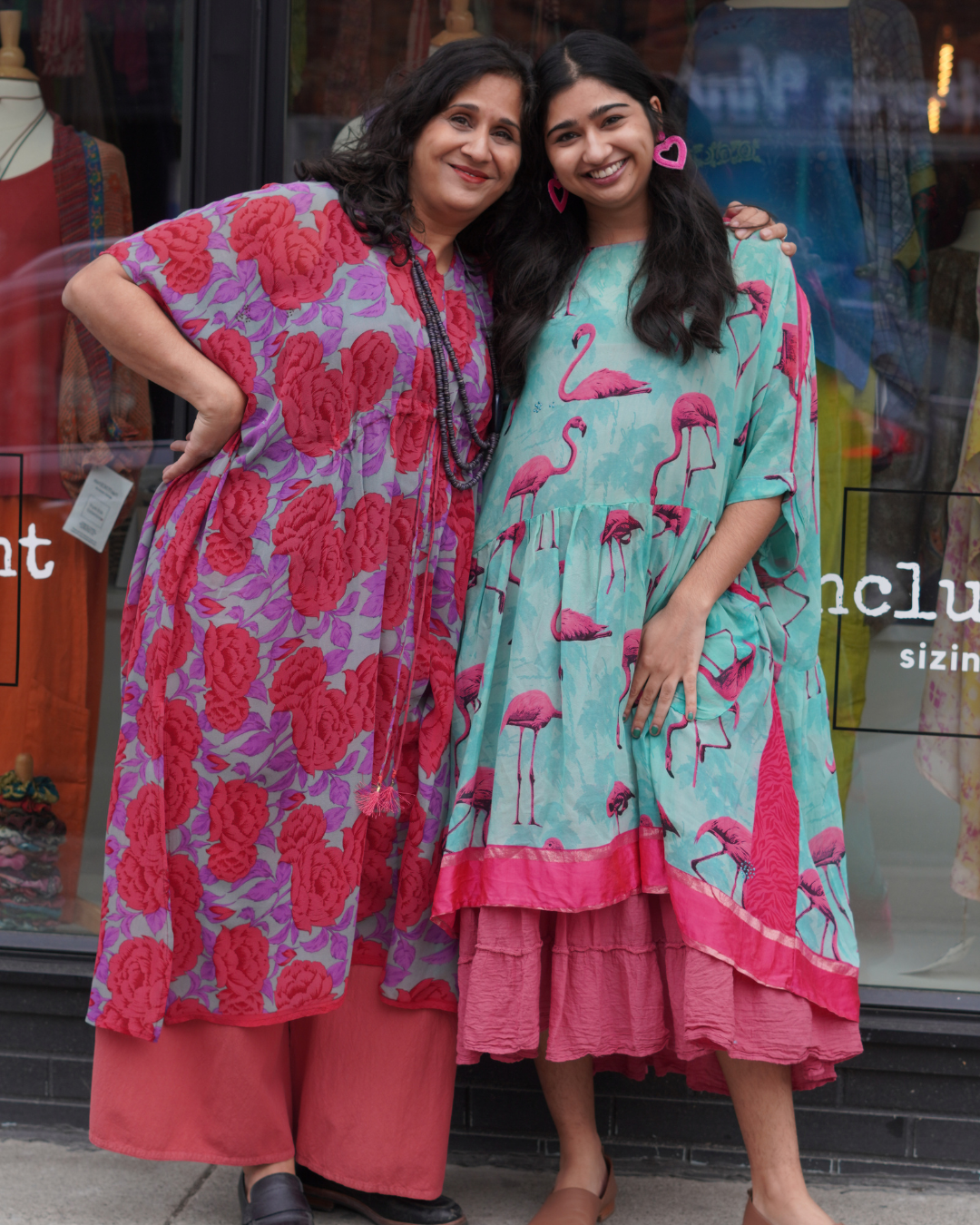
And that realization feels strangely familiar when I think about sariKNOTsari.

Every piece of silk we work with began its life decades ago as a sari. Someone chose that fabric. Someone wore it through ordinary days and important ones. The silk moved through time before it ever reached our hands.
When we turn that fabric into clothing again, we are not starting from a blank slate the way a factory does. The material already carries a past with it — colours chosen years ago, patterns printed by another generation, folds that once wrapped around someone’s body.
Machines are very good at making new things. But they cannot manufacture history.
Sometimes when someone holds one of our silk pieces, they pause for a moment. They notice the softness of the fabric or the way the colours work together. Occasionally they notice something small — a slightly pulled weft thread, the hand-knotting on the reverse of a kantha-stitched silk.
Not a flaw. More like evidence. Evidence that the material has lived somewhere before.
It makes me wonder if what we are seeing in the diamond world is not really about diamonds at all.
Maybe it is simply what happens when perfection becomes easy to make. We start looking for the story again.
And sometimes, without quite realizing it, we start preferring the things that carry one.


Leave a comment
This site is protected by hCaptcha and the hCaptcha Privacy Policy and Terms of Service apply.