
Old Instructions
I saw a video recently that made me pause.
A woman noticed that a car had parked with the front end extending slightly across the bottom of her driveway. She was annoyed. Fair enough. Most of us have had moments where somebody else’s behaviour has disproportionately irritated us.
Here’s what happened next.
She called her husband, and together they came up with a plan. She moved her own vehicle to the end of her driveway so that the other car would be trapped when the driver returned.
She even adjusted it again later in the day, with the help of her 7-year-old, to trap the offending car in more tightly. The whole thing became an event. She filmed it. She spent the day outside with her children playing while periodically checking on the situation. Day faded into night and she was still waiting.
The owner of the car wasn’t even there. He had gone off and lived the rest of his day.
She kept watch, video camera still recording, waiting for her moment.
Eventually, sometime around midnight, he appeared. There was a confrontation. The video ended. Millions of people online debated who was right.
I have no opinion on who was right.
What I keep wondering is how she managed to stay interested for that long.
I lose interest in my own problems faster than that.
There are emails I should answer. There is a garden that needs tending. There are still rooms in my basement filled with boxes waiting to be unpacked, four years after we moved into this house. There are books beside my bed that I keep meaning to finish. SO MANY BOOKS.
An entire day is a lot of time.
What was happening during those hours? Was she replaying the offence over and over while she “played” with the kids? Was she imagining the confrontation? Did she feel a little spark of satisfaction every time she looked out the window and saw that the car was still there?
I don’t know.
What I do know is that the whole episode made me think about how much energy we spend enforcing rules.
I’m not talking about laws or safety regulations. Those serve a purpose. I’m talking about the thousands of little social expectations that float around us.
The rules about how people should dress.
The rules about what is appropriate at a certain age.
The rules about what colours are acceptable.
The rules about how visible a person should be.
I see these rules in action all the time.
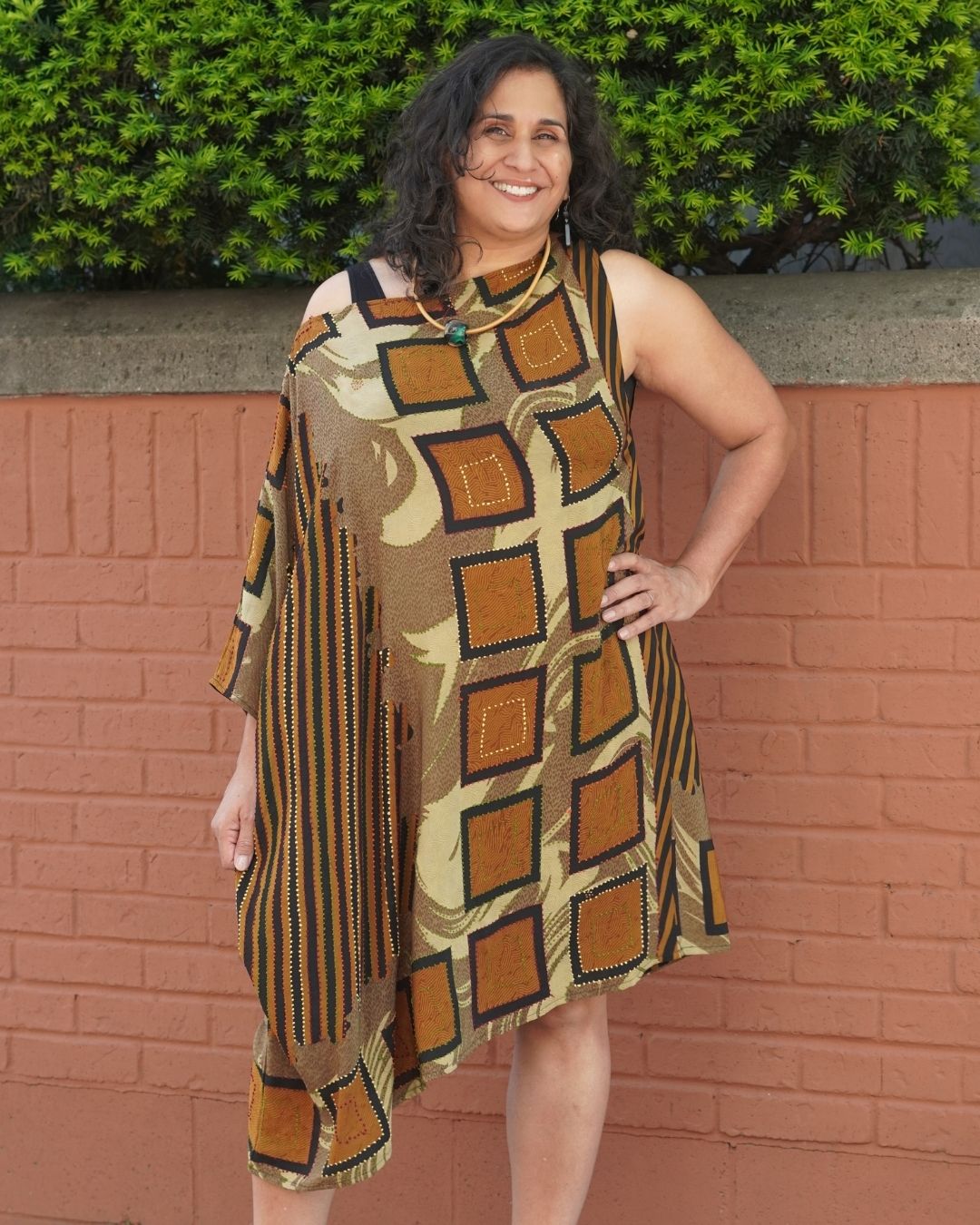
Sometimes a woman will try on something bright in the store and immediately start doubting herself. You can see that she loves it. Then another voice arrives and starts asking questions. What will people think? Is this too much? Am I too old for this?
Too old according to whom?
Too much for whom?
Excellent questions.
For rules that seem to matter so much, it’s surprisingly difficult to figure out who made them in the first place.
Pride Month brings some of this to mind as well.
Every year I find myself noticing how much negative attention is directed toward people who are simply living their lives. People seem remarkably concerned with strangers. Strangers who are not preventing them from getting out of their metaphorical driveway. Strangers who aren’t anywhere near their metaphorical driveway.
I keep circling back to the distance between the offence and the reaction.
The amount of energy required to keep it alive.
I don’t actually think the woman in the video was really upset about a driveway anymore.
By the end of the day, the driveway had become something else. It had become a principle. A statement. Proof that somebody had crossed a line and that somebody else was willing to stand guard over it.
Sure, we all do this from time to time.
Maybe it feels reassuring to know where the lines are.
Maybe it feels reassuring to feel “right”.
Or maybe some of us have spent so much of our lives following rules that it becomes unsettling to watch someone else ignore them.
And perhaps that is why I keep thinking about the woman in the driveway.
What stays with me is the question of which rules we choose to defend and which ones we choose to question.
As you know from last week’s live, I’ve been thinking about the movie Memento lately. The whole premise is that the main character cannot create new memories, so he leaves notes for himself everywhere. Tattoos. Photographs. Messages. Instructions about who to trust and what matters.
The problem, of course, is that some of the instructions and reminders he has for himself are outdated.
They made sense at one point. They may even have protected him at one point. But he continues following them long after he has forgotten why they existed in the first place. And they no longer serve him.
I wonder how many of our unbreakable rules work the same way.
Somewhere along the way we learn that it is safer to blend in than stand out. Safer to be agreeable than difficult. Safer to keep our opinions to ourselves. Safer to dress a certain way. Safer to love a certain way. Safer to stay inside the lines.
Children are remarkably good at figuring out what keeps them safe. The trouble is that childhood rules have a way of following us into adulthood.
Years later, we may still be obeying instructions that were written by a frightened 6-year-old version of ourselves.
And yes, some of those instructions probably still serve us well.
Some may have outlived their usefulness.
The challenge, I suppose, is remembering that we are allowed to revisit them.
Allowed to ask where they came from.
Allowed to ask whether they still make sense.
Allowed to ask whether they are helping us build a life we love, or simply keeping us busy standing guard over a driveway that no longer needs protecting.




Leave a comment
This site is protected by hCaptcha and the hCaptcha Privacy Policy and Terms of Service apply.